Posts

Showing posts with the label Composites Design & engineering

Let’s Talk Composite Testing – Is That Fancy Material Really Strong?

Image
  Strength Isn’t Just in the Look In today’s world of innovation, materials aren’t just built to look sleek—they're engineered to perform. From aerospace components to high-performance sports gear,  composite materials  are sh aping industries with their promise of being stronger, lighter, and more durable than traditional options. But here’s the question:  how do we know these materials are really as strong as they claim to be? The answer lies in  composite material testing , a crucial process that goes far beyond basic quality checks. It's the invisible science that ensures a carbon fiber car panel can withstand real-world impact or that a wind turbine blade won't falter under pressure. If you’ve ever wondered what makes a “fancy” material trustworthy, this is where the conversation begins. What Exactly Are Composite Materials? Before diving into the testing side of things, it’s important to understand what composite materials actually are. In simple terms, co...

Closed Mould Composite Manufacturing Processes

Image
  In recent decades, many industries have increasingly adopted fiber-reinforced composites. These materials are preferred by various industries because of their high strength and lightweight, corrosion resistance, and design flexibility. How these composites are manufactured plays an important role in getting the desired shape and properties. The selection of the manufacturing process largely depends on the materials, the part design, and the end-use or application. The manufacturing process of composites can be divided into two broad categories- Open Mould Processes-  These involve creating composite parts in an open mould, allowing for easy access to the mould and direct application of composite materials. This manufacturing process is usually used for production parts that have lower tooling costs, need faster production times, and are simple in design. The most common processes are Wet Hand Lay-up, Spray Lay-up, Filament Winding, and Automated Tape Placement. Closed Moul...

Significance of Advanced Composites Manufacturing For Oil & Gas Industry

Image
  The oil and gas industry, characterized by its demanding operational environments, stringent safety standards, and the need for robust and reliable infrastructure, has witnessed a transformative evolution with the advent of advanced composites manufacturing. The integration of advanced composite materials, such as carbon fiber-reinforced polymers (CFRP) and glass fiber-reinforced polymers (GFRP), has ushered in a new era of innovation and efficiency. These materials offer a plethora of advantages, ranging from superior corrosion resistance to exceptional strength-to-weight ratios, thereby addressing critical challenges faced by the industry. In an industry where infrastructure is subjected to corrosive environments, extreme temperatures, and high-pressure conditions, the utilization of advanced composites emerges as a strategic solution. This integration is not merely a technological enhancement but a paradigm shift, redefining the standards of durability, safety, and performanc...

Let’s Understand About Resin Infusion in Composite Industry

Image
With the advancement in technology, the composite industry always has an ever-increasing demand for faster production rates while maintaining the quality of the material. Undoubtedly, composite materials have revolutionized numerous complex industries by offering a reliable combination of strength, durability, and lightweight properties. As we all know composite materials are formed with the help of several effective techniques to ensure their unique properties. Among the various manufacturing techniques, resin infusion is widely known for its versatility and efficiency. The technique is used to produce composite materials with high accuracy and repeatability along with complex geometries. Although resin infusion and vacuum bagging are similar kind of process, the only difference is that the fabric piles are placed in the mould dry and remains dry while the vacuum bag is assembled. Resin Infusion is the best option when producing composite materials for large structures and the techni...

Importance of Additive Manufacturing in Advanced Composites Production

Image
  As the technology grows, additive manufacturing is becoming more popular in the composite industry. Additive Manufacturing, or in other words 3D printing, helps product designers to create objects by adding layers of plastic and resin material. The process has revolutionized the composite manufacturing process and made it easier for designers to produce complex shapes without any hassle. With its great efficiency and versatility, the method is used to manufacture composites for aerospace, automotive, healthcare, and other complex industries. With the fast pace of time, the process is also adapting the latest technologies to facilitate a seamless manufacturing process. Before learning about its advantages, let’s understand a little more about additive manufacturing. It is one of the important aspects in advanced composite manufacturing to develop reliable composite materials. It encompasses methods of fabrication that build product models through the successive addition of ma...

Datum Sneak Peek Into Advanced Composite Manufacturing Techniques

Image
  Advanced composite materials, if explained in very simple words, are like super-powered building blocks that scientists and engineers use to create different amazing things. They are so special because they are incredibly strong and very light. Just Imagine having a material that is as tough as steel but much lighter, making it perfect for various industries. These materials can be used to manufacture technologically advanced aircraft as well as simple helmets. The composites are the perfect choice for products that require high strength along with very little weight. It also gives the extra benefit of being cost-efficient and customizable. Advanced Composites have found an irreplaceable place in various industries, from automotive to aerospace and from infrastructure to recreation. Since composites are used in very sensitive and technologically advanced industries like aerospace and marine etc., quality takes the forefront. Advanced Composites Manufacturing companies use adva...

Applications of Composites Design & Engineering in Aerospace Industry

Image
  When it comes to the aerospace industry, it is always been at the cutting edge of technological development and continually adapting methods to enhance efficiency and productivity. One such technological advancement is composite materials. In recent years, composites have played an essential role in the aerospace industry with the help of their exceptional qualities. Composites are gaining fame in the aerospace industry because for numerous reasons such as being lightweight, highly versatile, remarkable resistance, etc. The composite materials are anticipated to provide a cost-efficient solution in the aerospace industry for various applications. Composites are materials that are formed by combining two or more different components to offer enhanced properties. These materials are used in various aerospace applications because of their reliable benefits over conventional materials. These materials are widely used in commercial, military, spacecraft, and helicopters. In the aero...

Applications Of Composite Materials In Different Industries

Image
  High-strength to weight ratios and anisotropic behaviour have made composite materials the best solutions to many problems among various industries. In just a few years, the advanced composite manufacturing industry has achieved great heights of success, owned new innovations, introduced new ways to do things, honoured existing processes, and helped industries in a significant manner. In this blog-post, we will be unveiling the contribution of advanced composites materials to make things better in various domains. Take a look- Aerospace Industry: When it comes to the aerospace industry, lightweight durability remains on the top of priorities. Achieving lightweight, efficiency, and durability has become possible with the development of composite materials only, and Carbon fibre is one among them. According to reports, the use of carbon fibre has grown by more than 20% since 2012. Companies like Datum Limited provide excellent solutions in the composite design & engineering...

What is the Importance of Computer Aided Designing in 3D Composite Modeling?

Image
Gone are the days when engineers used the drafting method and assembly drawings by using the traditional ways. The traditional way of drafting composite models is not only time-consuming but also hampers the work of both- designers and engineers while causing inaccuracies in design. The inaccurate designs can result in losing you a lot of fortune as well as time and effort because most organizations realize these flaws during the manufacturing stage. For that reason, the composite industry is turning to a 3D modeling process which helps in reducing design costs by enhancing overall design accuracy.  To facilitate a smooth 3D modeling process, the composite industry uses computer aided designing software . From architecture or aeronautics to mechanical engineering and the healthcare industry, all industries are now experiencing the full potential of 3D modeling and getting the best out of it. It can actually help in numerous ways including rendering, simulation, and manufacturing....

Advantages of Finite Element Analysis in Composite Modeling

Image
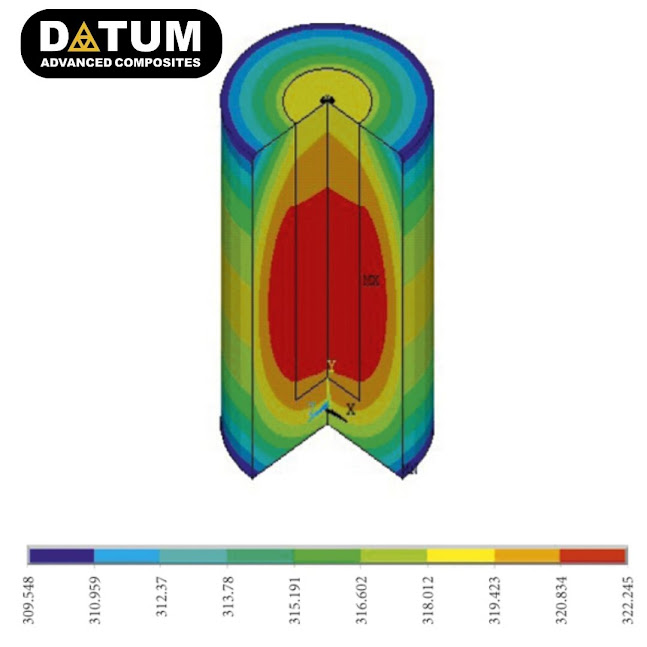
Widely popular in the composite industry, finite element analysis is a computerized technique that is used to predict how a specific product or material behaves under certain circumstances in the real world along with physical effects like heat, vibration, and stress. The process helps to determine whether the product is ideal for the modeling or not. If a product doesn't function properly in the required conditions, then it is processed for review. Using finite element analysis eliminates the need for multiple creations of physical prototypes and experiments performed while optimizing the quality of components during the designing phase. The analysis allows the engineers to discover a composite’s physical response at any location or under given circumstances. The finite element analysis offers various benefits in composite modeling for businesses in different sectors including aeronautics, defense, and construction. The method also helps to deal with concerns such as transport p...

Why is Finite Element Analysis the Future of Engineering?

Image
  As time is moving forward, innovations are shaping the future across industries. The companies are more concerned & thrilled about their product development than before. They want to make sure that whatever they craft outshines others in the market. In the engineering domain, the game is no different. Today, developing marvellous products like the Boeing 787 Dreamliner is made easy through finite element analysis (FEA).  A massive aircraft that boasts a 50,000 hp engine and is composed of 18,000 different parts feels surreal. But that is possible today with the help of the right technology and methodologies. Apart from the industry's best techniques, one thing that’s ironic is the FEA. Due to its capabilities of analysing the product design without even building a prototype is a mastermind move. In this article, we will learn what FEA is and how it will shape the future of engineering across industries. What is Finite Analysis? Finite element analysis also known as finit...